Savarkar: The Man the British Actually Feared
 Sabyasachi Sain•20-03-2026•7 min read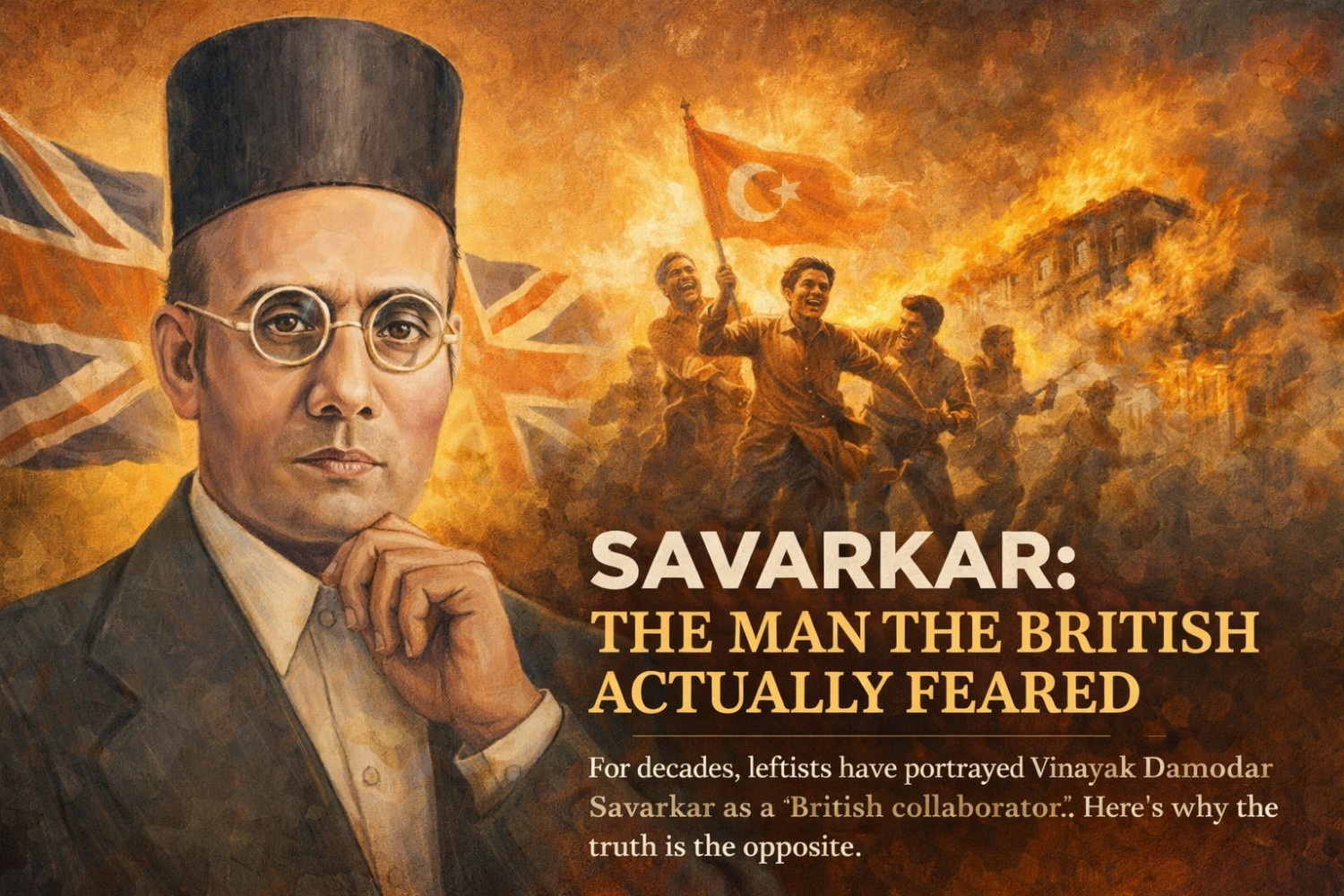
History is nearly neutral; it is always the battlefield where
the loudest voices often bury their most uncomfortable truths. For decades, a
specific school of leftist historiography has worked tirelessly to shrink the
towering legacy of Vinayak Damodar Savarkar under selective quotes and half-
truths. They have shamefully tried to portray a man who was sentenced to 50
years of rigorous imprisonment to a 'British collaborator.' But the archives and
the revolutionaries who actually fought on the ground tell a different story.
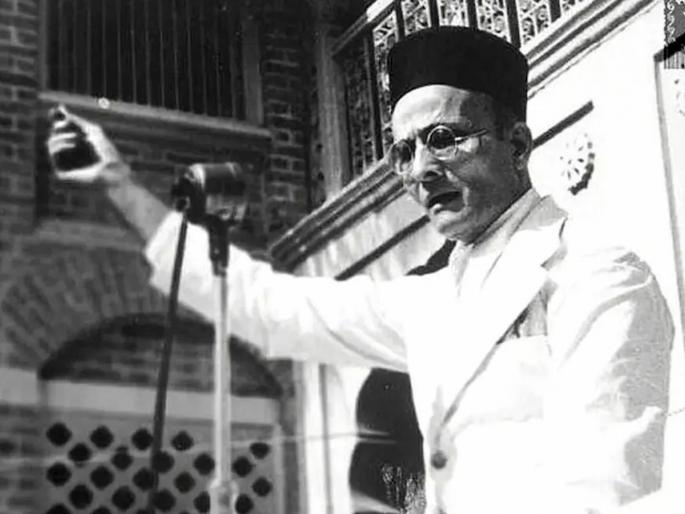
I. The 'Mercy Petition’
The most frequent weapon in the leftist arsenal is the
'petitions' Savarkar wrote from Kala Pani. They frame these as 'cowardly
begging.'
The kala Pani reality: Kala Pani was a torture chamber. Savarkar was yoked
to an oil mill(kolhu) like an ox. If he fell short, he was severely whipped. In his
autobiography, ' Mazi Janmathep ', Savarkar delineates the 'Shiva-Strategy.' He
believed a revolutionary rotting in a cell is an asset to the British, but a
revolutionary on the streets is a threat.
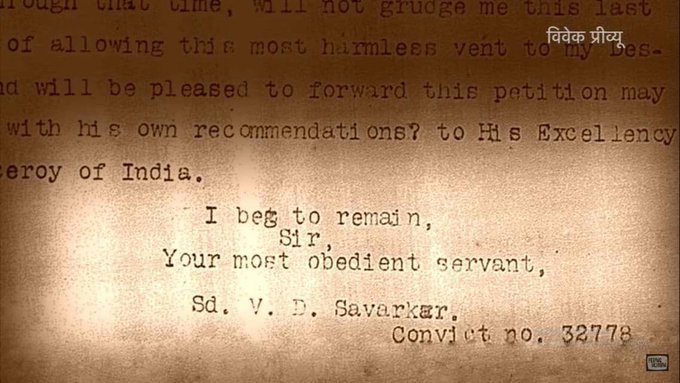
The Dange Double Standard: If petitions are really betrayal, have look at the grovelling mercy petition of S.A. Dange, one of the founding members of CPI. In 1924, Dange wrote: “ Please release us as soon as possible. I have never been positively disloyal towards His Majesty nor do I intend to be in future. ”
Source: Dange Unmasked / Marxist archive

Mercy petition was the only option to come out of jail in absence of bail provision under the British law. Veer Savarkar was a Barrister and hence he knew the British law very well so he and many others like Comrade Dange opted for mercy petition. Yet they selectively mock Veer Savarkar but remain silent on Comrade Dange.
II. The 'British Pension’
Leftist often criticizes Savarkar as a 'Paid Agent' due to a monthly allowance. This is a complete distortion. Upon his release in 1924, Savarkar was placed under punitive house arrest in Ratnagiri (1924-1937). He was legally forbidden from practicing law or seeking employment.
Source: Order of the Bombay Government, Jan 6, 1924


Source: Home Department (Political), Government of India, File No. 138/1930 & File No. 3/19/44-Pol (I)
After being unconditionally released from restrictions to the Ratnagiri district in 1937, he was still closely monitored by the British Intelligence (IB) and local police 24/7 due to his leadership of the Hindu Mahasabha, and they continued the surveillance until 1947. Real agents are not treated like a high-risk threat. The British even didn’t monitor their own agents for such long period.
III. The Radical Social Reformer
The Left leaning thinkers and historians paint Savarkar as a 'casteist'. In reality, his social reform was radical. He identified the 'Saptabandi' (Seven Shackles) like 'Sparshabandi' (untouchability) that crippled Hindu society, hindering its progress and unity.
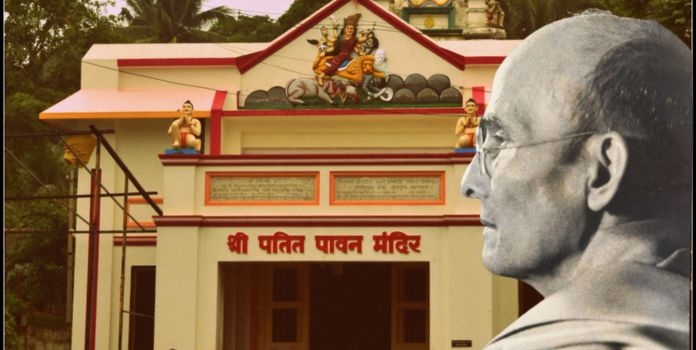
Patit Pavan Temple: In 1931 Savarkar established Patitpavan Mandir
("Temple of the Purifier of the Fallen") in Ratnagiri. This was a first-of-its-kind
temple designed to be opened to all castes with 'untouchable' priests. He
organized 'Sahabhojan' (inter-caste dining) events where Brahmins and
individuals from former 'untouchable' castes (such as Mahars and Chamars) ate
together to break down social barriers.
 He self-described himself as an atheist who urged Hindus to adopt a
scientific outlook. He even attacked 'blind cow worship' in favour of economic
utility. He argued that the cow is a useful animal, but not a god, and urged for a
scientific, economic approach to agriculture rather than a purely religious one.
He also argued that cows should be protected for their utility (milk, agriculture)
rather than venerated as deities.
He self-described himself as an atheist who urged Hindus to adopt a
scientific outlook. He even attacked 'blind cow worship' in favour of economic
utility. He argued that the cow is a useful animal, but not a god, and urged for a
scientific, economic approach to agriculture rather than a purely religious one.
He also argued that cows should be protected for their utility (milk, agriculture)
rather than venerated as deities.
Source: Ratnagiri District Gazetteers
IV. The Two-Nation Theory
Leftists blame Savarkar for Partition. In truth, in his
1937 Hindu Mahasabha presidential address in Ahmedabad, he was stating a
sociological fact - that Hindus and Muslims were already living as two distinct
cultural blocks. India was not a homogeneous nation but rather composed of two
"nations" in the main: Hindus and Muslims.
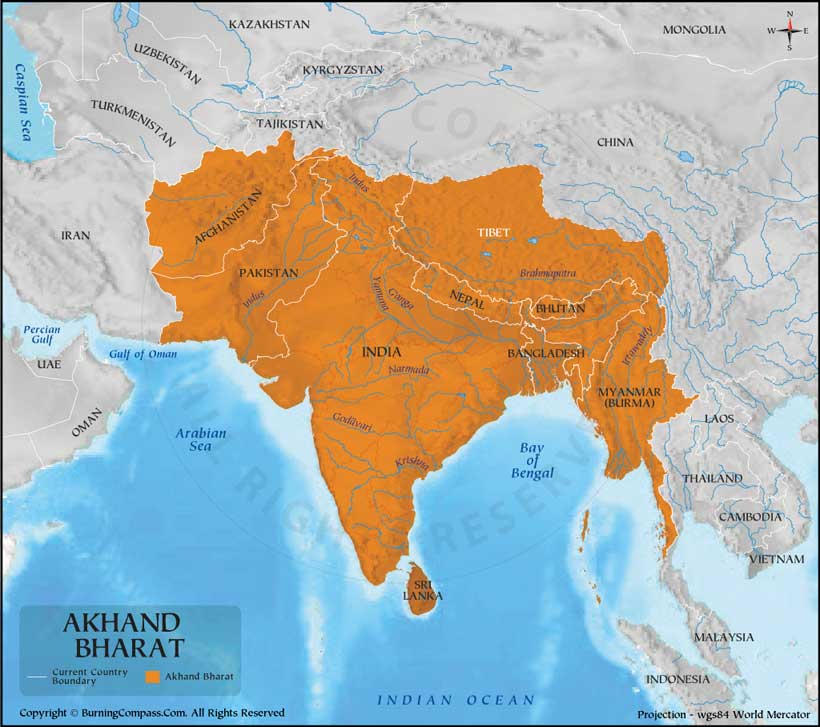
Unlike the Muslim League, Savarkar's solution was 'Equal rights for all, special privileges for none '. He advocated for a united India( Akhand Bharat ) where every citizen had the same rights. Muhammad Ali Jinnah and the Muslim League formally adopted the demand for a separate Pakistan at their Lahore session in 1940. The 'Adhikari Thesis' (1942), authored by Communist Party of India(CPI) leader G. Adhikari. It was Jinnah and the Communist-supported 'Adhikari Thesis' that pushed for actual vivisection.
V. The Icon of the Armed Revolution
If Savarkar was a 'traitor', why did the greatest revolutionaries worship him?
- Bhagat Singh : He treated Savarkar's literature as a manual. His comrades in the HSRA (Hindustan Socialist Republican Association) treated Savarkar’s writings, specifically his historical and political analyses, as a guide for armed resistance. He personally supervised the 4th edition of ' The Indian War of Independence 1857 ', ensuring its publication and distribution in India after it had been banned by British authorities. Bhagat Singh in 1924 in an article called 'Viswaprem' in Matwala magazine, he described “ The one who loves this world is that braveheart, whom we don’t feel ashamed to call as a fierce insurgent and a fanatic anarchist — this is the Veer (brave) Savarkar ”.
Source: 15 and 22 November 1924, Matwala, a patriotic Hindi weekly
- Netaji Subhash Chandra Bose : At a meeting in Bombay in June 1940, Savarkar advised Netaji to depart India and organize an army of liberation from prisoners of war. Netaji in his speech on Azad Hind Radio (June 25, 1944) acknowledged Savarkar's perspicacity in these words: " When due to misguided political whims and lack of vision, almost all the leaders of Congress party have been decrying all the soldiers in Indian Army as mercenaries, it is heartening to know that Veer Savarkar is fearlessly exhorting the youths of India to enlist in armed forces. These enlisted youths themselves provide us with trained men and soldiers for our Indian National Army ."
Source: Azad Hind Radio, June 25, 1944
VII. The Gandhi Assassination
The 1948 assassination is used as the 'Forever Card' to cancel Savarkar. However, Savarkar was fully acquitted in 1949. The case against him rested almost entirely on the testimony of a single approver, Digambar Badge, who claimed that Nathuram Godse and Narayan Apte visited Savarkar on January 14 and 17, 1948, and that Savarkar blessed their venture. On February 10, 1949, Special Judge Atma Charan acquitted Savarkar citing insufficient supporting evidence.
The legal truth is his absolute innocence. To claim otherwise is contempt of the Indian Judiciary.
Reclaim the Truth
Savarkar did not seek a comfortable life. He chose the oil mills of Kala Pani and the isolation of Ratnagiri. He turned a 'Mutiny' into a 'War of Independence.' To judge him by tactical letters while ignoring the submissive letters of leftist icons is a historical sin. History cannot be hidden forever. Reclaim the truth. Reclaim the legacy of Veer Savarkar.